


Hydrogen fuel cells have long been considered a cornerstone of the clean energy transition, especially for sectors that are difficult to electrify. However, despite their promise, technical limitations have slowed widespread adoption. A recent breakthrough by researchers at the University of New South Wales (UNSW) may mark a turning point. By redesigning the internal structure of hydrogen fuel cells, the team has achieved up to a 75% increase in power output – potentially reshaping the future of aviation, heavy transport, and industrial energy systems.
1. The Long-Standing Bottleneck in Fuel Cell Technology
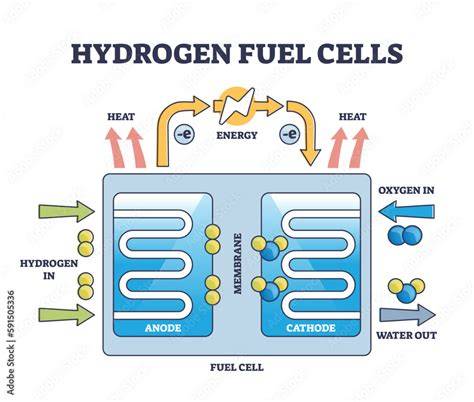
At the core of hydrogen fuel cells is a simple process: hydrogen reacts with oxygen to produce electricity, with water as the only byproduct. However, this process has historically faced a critical flaw – inefficient water and gas management within the cell.
As water accumulates, it blocks reaction sites and disrupts the flow of gases, reducing overall efficiency and limiting power output. This issue, often referred to as “flooding,” has been one of the main barriers preventing fuel cells from reaching their full commercial potential.
2. A Microscopic Design with Macro Impact
The UNSW research team addressed this challenge by introducing microscopic channels within the fuel cell structure. These channels act as “lateral bypasses,” allowing water and gases to move more efficiently through the system.
This seemingly small design change has a significant effect: it prevents blockages, maintains optimal reaction conditions, and dramatically enhances performance. The result is a fuel cell that delivers up to 75% more power compared to traditional designs – without fundamentally changing the core chemistry.
3. Why This Matters for Hard-to-Decarbonize Sectors
The implications of this breakthrough are particularly important for industries where battery electrification faces limitations.
In aviation, for example, weight and energy density constraints make conventional batteries impractical for long-haul flights. Hydrogen fuel cells, with their higher energy density and now improved efficiency, offer a viable alternative.
Similarly, in heavy transport—such as trucks, ships, and industrial machinery—fuel cells can provide the range and power required for continuous operations, while significantly reducing emissions.
4. Moving Closer to Commercial Viability
One of the biggest challenges for hydrogen technology has not been feasibility, but scalability and cost-effectiveness. Improvements in efficiency directly translate into better economics: more power from the same input means lower operational costs and improved competitiveness against fossil fuels.
With this advancement, hydrogen fuel cells are moving closer to commercial readiness, making them more attractive for large-scale deployment in both developed and emerging markets.
5. A Step Forward in the Clean Energy Transition
This innovation reflects a broader trend in clean energy: breakthroughs are increasingly coming not just from new technologies, but from refining and optimizing existing ones. By solving a decades-old engineering problem, UNSW researchers have unlocked new potential in a technology that was already seen as promising.
Conclusion
The 75% increase in hydrogen fuel cell power is more than a technical milestone – it is a signal that clean energy solutions are rapidly maturing. As efficiency improves and barriers to adoption are removed, hydrogen is poised to play a critical role in decarbonizing sectors that have long resisted change. If scaled successfully, this innovation could accelerate the transition toward a more sustainable, low-carbon global energy system.