


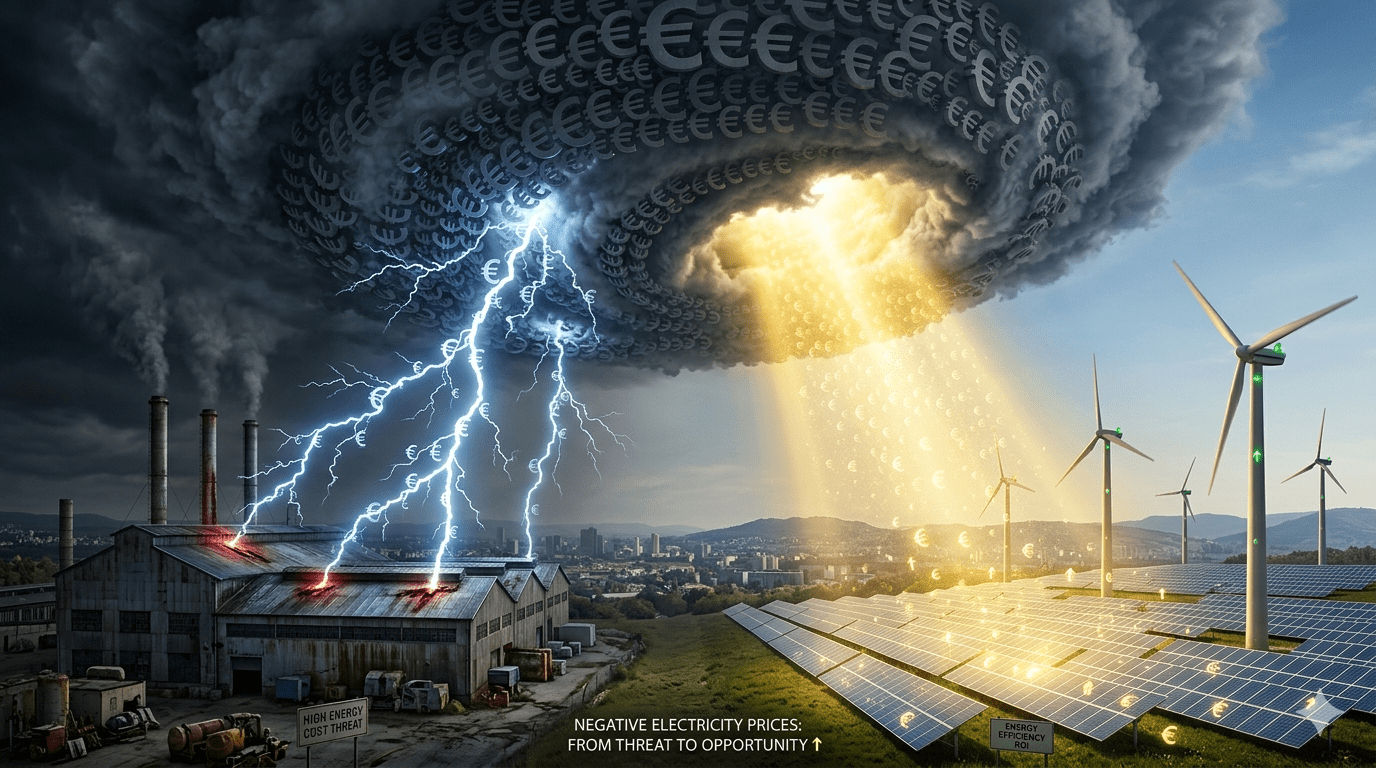
Thị trường năng lượng tại Châu Âu đang thay đổi chóng mặt. Trong khi nhiều doanh nghiệp phải vật lộn với hóa đơn tiền điện đắt đỏ, các nhà máy thông minh lại đang làm điều ngược lại: họ được trả tiền để sử dụng điện. Điều này xảy ra nhờ vào hiện tượng “giá điện âm”. Nếu bạn đang điều hành một nhà máy, việc thấu hiểu xu hướng này chính là cơ hội lớn nhất để cắt giảm chi phí trong năm 2026.
1. Tại sao điện lại miễn phí (hoặc có giá âm)?
Điều này nghe có vẻ phi lý, nhưng nó là sự thật. Do sự phát triển bùng nổ của năng lượng gió và mặt trời, đôi khi mạng lưới điện rơi vào tình trạng dư thừa năng lượng. Khi nguồn cung vượt quá nhu cầu, giá điện sẽ rớt xuống dưới mức 0.
-
Năm 2025, Đức đã ghi nhận 573 giờ có giá điện âm.
-
Tại Tây Ban Nha, Pháp và Thụy Điển, số giờ giá điện âm cũng đang tăng gấp đôi.
Kết quả là: Vào những khung giờ cao điểm của năng lượng xanh, các nhà máy theo đúng nghĩa đen là được trả tiền để tiêu thụ điện năng.
2. Vì sao doanh nghiệp của bạn cần quan tâm?
Ngay cả khi nhà máy của bạn không nằm ở Châu Âu, xu hướng này đang lan rộng ra toàn cầu. Năng lượng xanh đang phát triển nhanh hơn rất nhiều so với sự phát triển của hệ thống lưu trữ pin. Điều này gây ra những biến động giá cực đoan. Nếu bạn không theo dõi mức tiêu thụ năng lượng của mình, những biến động này sẽ là một rủi ro tài chính khổng lồ. Nhưng nếu bạn sử dụng công nghệ thông minh để quản lý nguồn điện, chúng sẽ trở thành một cơ hội vàng.
3. Giải pháp: Theo dõi Năng lượng Thông minh
Để kiếm lời từ xu hướng này, bạn cần giám sát năng lượng theo thời gian thực. Một Hệ thống Quản lý Năng lượng Thông minh (Smart Energy Management System) sẽ giúp bạn:
-
Ngăn chặn lãng phí năng lượng: Phát hiện các máy móc đang âm thầm ngốn điện (nguyên nhân chiếm tới 40% lượng năng lượng thất thoát của nhà máy).
-
Dịch chuyển lịch trình: Vận hành các máy móc công suất lớn (như lò sưởi, hệ thống làm mát hoặc máy nén) vào những khung giờ giá điện rẻ nhất hoặc có giá âm.
-
Ngăn ngừa hỏng hóc: Phát hiện sớm các động cơ có dấu hiệu xuống cấp. Một động cơ hoạt động kém sẽ tiêu thụ thêm 10-15% điện năng trước khi hỏng hoàn toàn.
4. Tỷ suất hoàn vốn (ROI) nhanh chóng
Việc đầu tư vào hệ thống theo dõi năng lượng thông minh sẽ mang lại hiệu quả tài chính rất nhanh. Theo Cơ quan Năng lượng Quốc tế (IEA), 70% các công ty công nghiệp ghi nhận mức ROI trên 10%.
-
Mức tiết kiệm trung bình: Từ 20% đến 35% trên hóa đơn tiền điện.
-
Thời gian hoàn vốn: Thường chỉ mất từ 1 đến 3 năm.
-
Ví dụ thực tế: Một nhà máy hóa chất gần đây đã nâng cấp hệ thống theo dõi năng lượng của họ. Kết quả, họ đã cắt giảm 76% lượng khí thải CO2 và thu hồi vốn đầu tư chỉ trong vòng 1,7 năm.
5. Chỉ lắp tấm pin năng lượng mặt trời tốt là chưa đủ
Công nghệ năng lượng mặt trời đang ngày càng rẻ và mạnh mẽ hơn. Tuy nhiên, nếu chỉ đơn thuần lắp đặt các tấm pin trên mái nhà thì chưa đủ để tối đa hóa lợi nhuận. Một hệ thống điện mặt trời chỉ là một nguồn cung cấp điện thụ động. Để khai phá giá trị thực sự của nó, bạn phải theo dõi chính xác lượng điện được tạo ra và đồng bộ hóa mức sử dụng của nhà máy với những thời điểm có giá điện tốt nhất. Trong thế giới năng lượng hiện đại, việc tối ưu hóa nguồn điện cũng quan trọng không kém việc tạo ra nó.
Kết luận: Đã đến lúc hành động
Câu hỏi dành cho các nhà quản lý nhà máy không còn là “có nên” đầu tư vào hệ thống giám sát năng lượng thông minh hay không, mà là “khi nào” thì bắt đầu. Tương lai của ngành điện sẽ biến động cực kỳ mạnh. Các đối thủ cạnh tranh thông minh đã và đang biến những biến động giá này thành lợi thế cạnh tranh của riêng họ.
Bạn đã sẵn sàng để biến chi phí năng lượng của mình thành lợi nhuận chưa?