


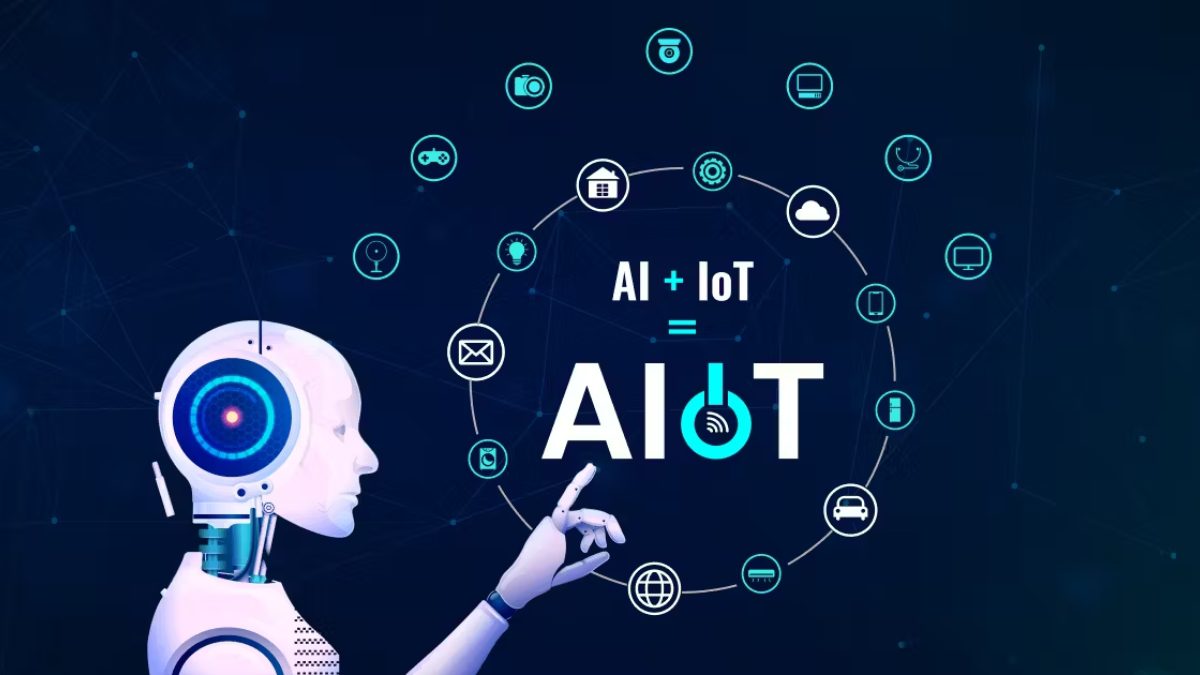
In an increasingly data-driven business environment, continuing to rely on manual monitoring has become a significant risk. It not only limits operational visibility but also slows down response times to incidents leading to higher operating costs and erosion of customer trust.A real-world example from the food supply chain of Walmart shows that the gap between when a problem occurs and when a business detects it is the key factor that determines cost.
- The Cost Problem: When Delays Are Measured in Tens of Thousands of Dollars
According to industry reports from McKinsey & Company and Deloitte, unplanned downtime in manufacturing can cost tens of thousands of dollars per incident.
Meanwhile, predictive maintenance powered by IoT and AI can significantly reduce costs, including:
-
-
- 25–30% reduction in maintenance costs
- 10–20% increase in equipment uptime
- 70–75% reduction in equipment failures
-
No human can monitor machine vibrations or temperature 24/7 with perfect accuracy. In contrast, IoT acts as an extended “arm” that continuously collects data, while AI analyzes it and provides early warnings before failures occur.
The result: substantial cost savings, and more importantly, the ability to prevent failures before they cause major damage.
- The Trust Problem: When Speed Determines Everything
This challenge is not limited to manufacturing—it is equally critical in food supply chains. Previously, Walmart took up to 7 days to trace the origin of a contaminated food product using manual processes. During that time, risks to consumers continued, and companies were forced into large-scale recalls at significant cost. In the food industry, the issue is not just cost it is consumer trust, which can be lost after just one delayed response.
By partnering with IBM and implementing IoT combined with blockchain, traceability time has been reduced to just 2.2 seconds. IoT captures real-time data, while blockchain ensures transparency and immutability. As a result, businesses not only save millions of dollars but also protect their brand reputation.
- The Common Thread: Everything Is About Time
At first glance, these two examples—one in manufacturing and one in logistics—may seem different. In reality, they share the same core principle: the gap between when a problem occurs and when it is detected.
| Factor | Manual Monitoring | IoT + AI |
| Failure detection | After it happens | Before it happens |
| Data traceability | 7 days | 2.2 seconds |
| Cost | Tens of thousands to millions USD | Reduced maintenance cost by 25–30% |
| Operating model | Reactive (firefighting) | Proactive (prevention) |
In other words, IoT does not just help businesses know more—it helps them know earlier, and this “earlier” is what ultimately determines cost.
Conclusion: Businesses Don’t Lose Money Because of Technology—But Because of Delay
Whether in manufacturing or supply chains, one thing is clear: manual monitoring is not only less efficient, but also significantly more expensive.Businesses lose not only money, but also time and in many cases, customer trust.In the data-driven era, the question is no longer “Should we adopt IoT?”, but rather: “How long can your business afford to operate without real-time data?” Because ultimately, not seeing a risk does not mean it does not exist—it simply means you will pay for it later, and at a much higher cost.