


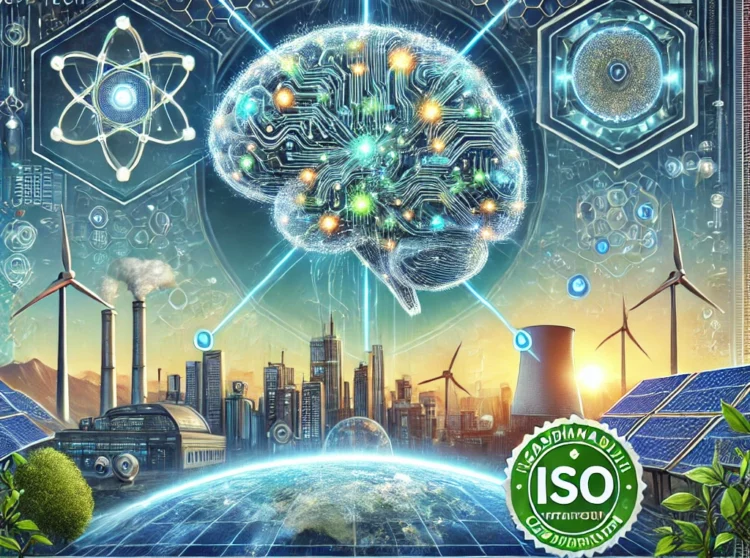
Earth Month has historically served as a global moment for corporations, governments, and organizations to reaffirm their commitment to sustainable development. However, in 2026, the nature of this occasion has fundamentally changed. The discussion is no longer focused on the promises of organizations, but on what they can demonstrate empirically in real time.
This shift is not merely superficial. It reflects a deeper structural transformation in how sustainability is assessed in capital markets, governance systems, and technological infrastructure. ESG is no longer a reputation-building factor—it is becoming a core variable in operations and finance.
1. The structural decline of the “greenwashing” phenomenon in capital markets.
Over the past decade, the adoption of ESG has grown rapidly in global businesses. Current estimates suggest that over 90% of S&P 500 companies publish some form of ESG or sustainability reporting, demonstrating widespread recognition of environmental and social responsibility. However, behind this expansion lies a serious inconsistency: verification has not kept pace with disclosure.
Empirical analyses across multiple sustainability reporting frameworks have shown that:
- Less than 40% of large corporations have independent third-party assurances regarding their emissions data.
- Emissions in category 3 – which typically account for 70–90% of a company’s total carbon emissions – remain the least measured, least standardized, and most frequently estimated component.
- Differences in reporting methods can lead to discrepancies of 20–30% or more between similar companies in the same industry.
From a financial perspective, this creates a misvaluation problem. Institutional investors are increasingly aware that unverified ESG claims carry risks, especially as regulatory scrutiny intensifies. Evidence from sustainable investment studies shows that companies suspected of engaging in “greenwashing” may face:
- The valuation discount ranges from 15-25% compared to leading companies in reliable ESG practices.
- The cost of capital increased due to identified weaknesses in governance.
- Increased risk of penalties under emerging disclosure regimes.
With frameworks such as the EU Corporate Sustainability Reporting Directive (CSRD) and growing climate disclosure requirements in major economies, ESG is shifting towards a system focused on compliance and audit readiness.
In this environment, “greenwashing” is not only ineffective but also structurally unsustainable. The market is gradually eliminating the information asymmetry that once allowed story-based ESG strategies to survive.
2. Nuclear fusion reactions accelerated by artificial intelligence: Shortening the path to a breakthrough in clean energy.
Fusion energy has long been considered the “ultimate solution” to clean energy challenges; however, its commercialization process has historically been fraught with uncertainty due to its immense technical complexity. Nevertheless, the integration of advanced artificial intelligence into fusion research is reshaping this trajectory in measurable ways.
Recent developments in leading research initiatives suggest that:
- Artificial intelligence-enhanced simulation environments can shorten plasma simulation cycles from weeks to hours, resulting in up to 100 times greater efficiency in specific experimental settings.
- Machine learning algorithms have improved plasma confinement and stabilization metrics by approximately 20–30%, addressing one of the most critical bottlenecks in sustained nuclear fusion reactions.
- Total global private and public investment in the nuclear fusion sector now exceeds $6-7 billion, with an increasing proportion directed toward AI-integrated test platforms.
The strategic importance of this acceleration extends beyond scientific progress. From an energy systems perspective, nuclear fusion offers an entirely different economic model:
- Marginal fuel costs are close to zero, due to the abundant supply of deuterium.
- There are no direct carbon emissions during operation.
- High energy density with significantly lower land use requirements compared to traditional renewable energy sources.
Energy system models suggest that the successful large-scale deployment of fusion energy could reduce long-term global electricity price volatility by 30-50 %, while enhancing energy security for import-dependent economies.
Therefore, artificial intelligence is not merely a supporting tool but also acts as a power-scaling factor, transforming nuclear fusion from a distant theoretical concept into a viable infrastructure reality in the medium term.
3. Renewable energy surplus: The emergence of electricity with zero and negative costs.
While fusion energy is shaping the long-term vision, renewable energy is gradually reshaping the current electricity market economy. The rapid expansion of wind and solar power capacity has led to a phenomenon that until recently was considered counterintuitive: widespread energy oversupply.
In many advanced energy markets:
- Renewable energy currently accounts for 40-50% or more of total electricity production, and this figure continues to rise.
- Wholesale electricity prices have reached 0 euros/MWh or even negative for hundreds of hours each year, especially during peak periods of wind or solar power production.
- In countries like Germany and parts of Northern Europe, negative pricing events have exceeded 300 hours per year, reflecting a structural imbalance between supply and demand.
This change marks a fundamental turning point:
The global energy system is shifting from a scarcity model to a model of intermittent abundance.
However, this abundant resource remains largely untapped. Structural limitations persist, including:
- Grid-scale energy storage capacity is limited.
- Bottlenecks exist in the transmission infrastructure between power generation areas and consumption areas.
- Demand-driven response mechanisms are insufficient to automatically absorb excess supply.
As a result, billions of dollars worth of potential energy have been effectively lost due to cuts or inefficient use.
Therefore, the next phase of the energy transition will be defined not by increasing power generation capacity, but by optimization at the system level – where smart grids, AI-based load balancing, and real-time energy analytics become extremely important.
4. Convergence: ESG as a Real-Time Infrastructure Layer
The most significant transformation does not stem from any single development, but from the convergence of these trends into a unified system.
Three structural forces are simultaneously intertwined:
- The acceleration of technology – Artificial Intelligence (AI) – is creating breakthroughs in both next-generation energy systems (nuclear fusion) and current energy systems (optimizing renewable energy).
- Energy market transformation – Electricity is shifting from a scarce commodity to a dynamically managed resource.
- Regulation enforcement and finance – ESG is evolving into a mandatory, auditable, and standardized framework.
This convergence fundamentally redefines ESG. It’s no longer a reporting layer applied after an activity is complete – it’s becoming an infrastructure layer deeply embedded within the activities themselves.
In practical terms, this means:
- Integrate real-time energy consumption data with emissions monitoring systems.
- Automated ESG reporting processes are driven by IoT-enabled monitoring technology.
- Continuously verify the effectiveness of sustainable operations, rather than publishing periodic results.
Capital allocation increasingly reflects this shift. Investment flows are moving toward organizations capable of demonstrating sustainable, quantifiable performance at the systemic level, rather than those that rely solely on verbal image building.
In such an environment, transparency is not an option but a structural necessity, enforced by both technology and the market.
5. Conclusion: From commitment to calculation
A key feature of Earth Month 2026 is the shift from commitment-based sustainability to compute-based sustainability. This is a move from intention to measurement, from narrative to infrastructure, and from periodic reporting to continuous verification.
The consequences are both immediate and long-term:
- The phenomenon of “greenwashing” gradually decreases as data transparency increases and verification becomes mandatory.
- Energy innovation is being strongly driven by the integration of artificial intelligence and advanced scientific research.
- Renewable energy systems demonstrate that large-scale clean energy deployment is not only feasible but is also reshaping economic reality.
In this new model, reputation is no longer established through communication strategies. It is established through measurable performance, validated data, and operational transparency.
Organizations that fail to adapt to this model will face increasing financial, legal, and reputational risks. Successful organizations will shape the next generation of competitive advantage – where sustainability is not a cost center, but a core driver of efficiency, resilience, and long-term value creation.