


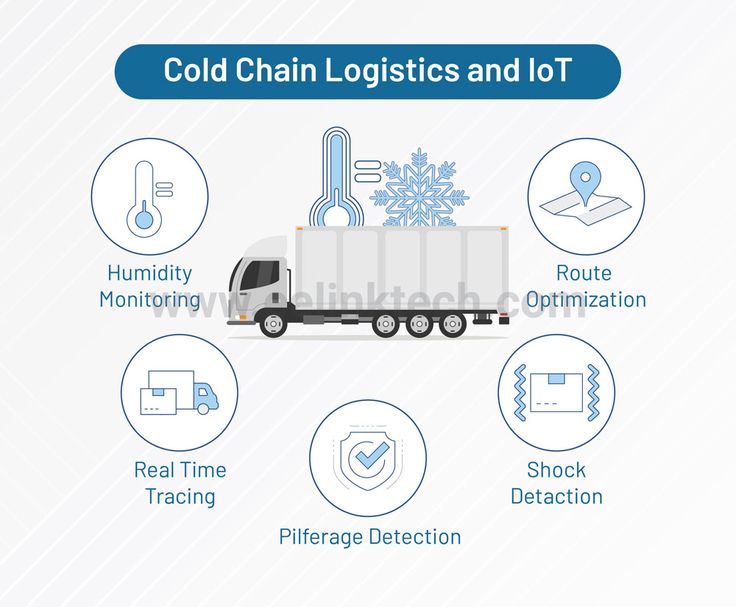
In cold chain logistics, passive monitoring is no longer enough. Despite massive investments in tracking technology, unseen temperature fluctuations continue to silently erode profits and ruin sensitive cargo. To stop these losses, supply chains must evolve from reactive networks into proactive, “self-healing” ecosystems powered by Edge AI.
1. Small Temperature Fluctuations, Big Financial Consequences
In cold chain logistics, temperature stability is not just a technical requirement — it is a direct driver of profitability. For sensitive goods such as vaccines, pharmaceuticals, and fresh food, even a small deviation of around 2°C can reduce product effectiveness, shorten shelf life, or cause shipments to fall outside compliance standards. What makes this challenge particularly difficult is that risks rarely come from major equipment failures. Instead, they emerge from everyday operational realities such as frequent delivery stops, extended door openings, or goods moving through multiple environments with different ambient temperatures.
Because these small disruptions occur repeatedly throughout the logistics journey, their financial impact often accumulates gradually rather than appearing as a single visible incident. Companies may notice higher spoilage rates, increased operational costs, or inconsistent delivery quality without immediately identifying the root cause. Temperature fluctuation therefore becomes a silent profit killer, slowly reducing supply chain efficiency. However, identifying temperature deviations alone is not enough, because the true differentiator lies in how quickly the system can respond once conditions begin to change.
2. Why Traditional Monitoring Is Not Fast Enough
Over the past decade, IoT sensors have significantly improved visibility across cold chain operations by enabling real-time temperature tracking. Despite this progress, many systems still rely heavily on cloud computing to process sensor data before adjustments can be made. This creates a natural delay between detecting a temperature shift and executing a corrective action.
While such delays may be acceptable in other digital applications, cold chain logistics operates within extremely narrow temperature tolerances. Even a short period outside the optimal range can compromise product integrity. Connectivity limitations during long-distance transportation can further increase response time, especially when vehicles move through areas with unstable network coverage. These challenges highlight an important limitation: improved visibility does not automatically translate into improved control. To truly protect sensitive cargo, decision-making capability must be positioned closer to where temperature changes actually occur.
3. Edge AI Brings Decision-Making Closer to the Data Source
Edge AI addresses latency challenges by processing data directly at the point where it is generated, rather than relying entirely on centralized cloud infrastructure. By embedding intelligence within refrigerated trucks, containers, or storage systems, temperature data can be analyzed instantly, allowing cooling systems to respond without waiting for remote instructions.
Reducing the distance between data collection and decision-making significantly improves response speed to environmental fluctuations. When temperature begins to rise, the cooling output can automatically adjust to maintain stability. When conditions normalize, the system can reduce cooling intensity to avoid unnecessary energy consumption. This real-time responsiveness enables cold chain systems to move beyond passive monitoring toward active control, preventing damage before it occurs rather than reacting afterward.
As response speed and precision improve, cold chain infrastructure begins to evolve into a more autonomous operational model where systems can continuously optimize performance with minimal human intervention.
4. From Intelligent Monitoring to a Self-Healing Cold Chain
 When IoT sensors continuously capture environmental data and Edge AI continuously evaluates and responds to it, the cold chain can function as a self-healing system. This means the system does not simply detect temperature deviations but actively corrects them before they escalate into serious risks.
For example, during multi-stop deliveries, doors are frequently opened, allowing warm external air to enter the refrigerated compartment. In traditional systems, this change may only be addressed after temperature thresholds have already been exceeded. With Edge AI, even small deviations can be detected immediately, triggering automatic adjustments in cooling output to maintain optimal conditions. Once stability is restored, the system recalibrates to maintain efficiency.
Over time, the system can also learn operational patterns, improving its ability to anticipate and respond to recurring scenarios. As a result, cold chain performance becomes not only more stable but also more adaptive to real-world logistics conditions.
5. Precise Temperature Control Also Improves Energy Efficiency
One important advantage of real-time adjustment capability is improved energy optimization. Traditional refrigeration systems often operate continuously at high capacity to minimize the risk of temperature excursions. While effective in protecting goods, this approach often results in unnecessary energy consumption.
Edge AI enables dynamic optimization by adjusting cooling intensity based on real-time conditions. Cooling power increases only when required and decreases once temperature stability is achieved. This prevents overcooling while maintaining strict temperature standards.
Reducing unnecessary energy usage helps lower operating costs while also supporting sustainability objectives. When operational efficiency and energy efficiency improve simultaneously, cold chain infrastructure becomes a strategic asset for long-term business performance.
6. Conclusion: Self-Healing Cold Chains Will Become the New Standard
Edge AI is transforming how organizations approach temperature control in logistics. Instead of relying on delayed reactions after disruptions occur, systems can now detect risks early and respond instantly to maintain stability.
By combining IoT sensing capabilities with real-time Edge AI intelligence, cold chain logistics becomes more reliable, adaptive, and resilient. Businesses can reduce product loss, improve operational consistency, and optimize energy consumption without compromising quality.
As global supply chains become increasingly complex, real-time responsiveness will become a key competitive advantage. The self-healing cold chain is not simply a technological upgrade — it represents a new foundation for building more efficient, sustainable, and future-ready logistics systems.
Edge AI is turning that future into reality today.