


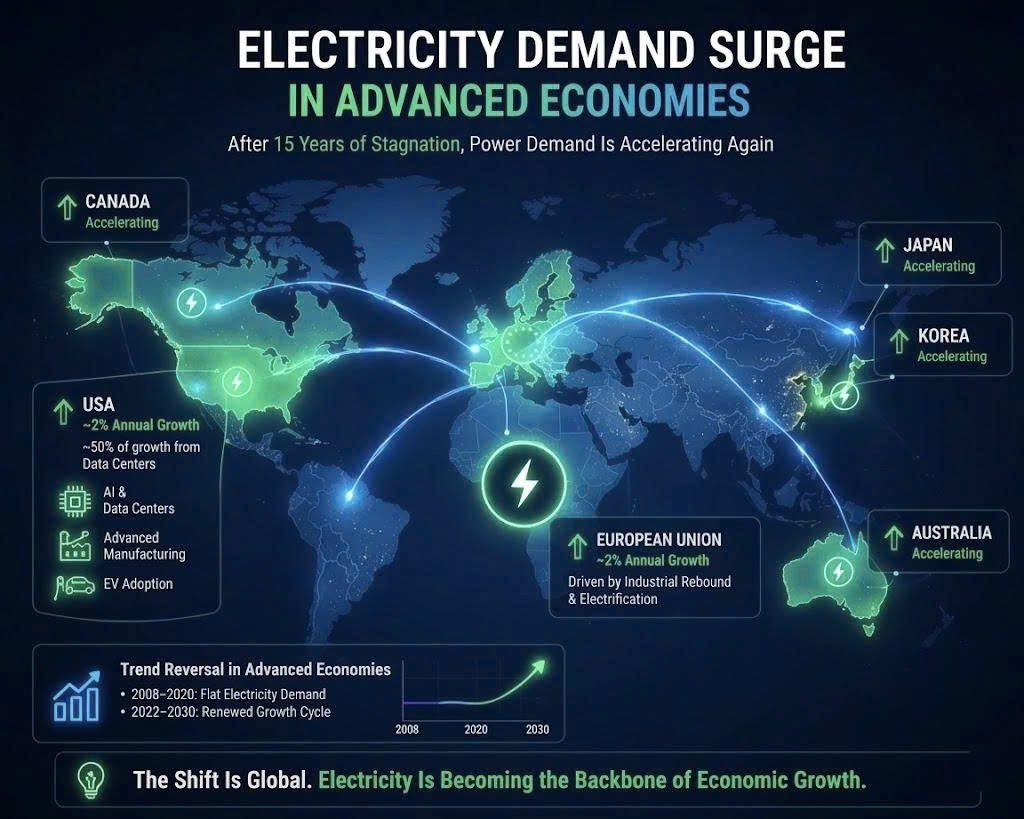
Nền kinh tế toàn cầu đang bước vào một giai đoạn chuyển đổi mới — nơi điện năng không còn chỉ là một nguồn lực hỗ trợ mà là động lực trung tâm của sự tăng trưởng, đổi mới và năng lực cạnh tranh. Sự mở rộng nhanh chóng của trí tuệ nhân tạo, trung tâm dữ liệu, xe điện và các hệ thống công nghiệp điện khí hóa đang thúc đẩy nhu cầu điện năng với tốc độ nhanh hơn đáng kể so với tổng mức tiêu thụ năng lượng. Sự dịch chuyển mang tính cấu trúc này đang định hình lại cách các nền kinh tế vận hành và cách các doanh nghiệp hoạch định cho tương lai.
1. Kỷ nguyên của Điện năng: Sự Dịch chuyển Căn bản Toàn cầu
Thế giới đang chứng kiến sự gia tăng nhanh chóng về nhu cầu điện năng, dự kiến tăng trưởng 3,6% mỗi năm cho đến năm 2030, nhanh hơn khoảng 2,5 lần so với tổng nhu cầu năng lượng. Xu hướng này báo hiệu sự khởi đầu của điều mà nhiều nhà phân tích gọi là Kỷ nguyên của Điện năng (Age of Electricity).
Khác với các cuộc chuyển đổi năng lượng trước đây, sự dịch chuyển này chủ yếu được thúc đẩy bởi quá trình chuyển đổi số. Trí tuệ nhân tạo đòi hỏi sức mạnh tính toán khổng lồ, dẫn đến sự mở rộng nhanh chóng của các trung tâm dữ liệu siêu quy mô (hyperscale data centers). Đồng thời, nỗ lực toàn cầu hướng tới kỷ nguyên di chuyển bằng điện (electric mobility) đang làm tăng nhu cầu về cơ sở hạ tầng trạm sạc, trong khi biến đổi khí hậu đang thúc đẩy việc sử dụng các hệ thống điều hòa không khí nhiều hơn trên toàn thế giới.
Sự kết hợp của các động lực này đang tạo ra một sự gia tăng mang tính cấu trúc về tiêu thụ điện, vượt ra ngoài các chu kỳ kinh tế thông thường. Điện năng đang trở thành xương sống của cơ sở hạ tầng hiện đại, làm nền tảng cho mọi thứ, từ điện toán đám mây đến các hệ thống sản xuất thông minh. Hệ quả là, các tổ chức đang bắt đầu coi dữ liệu năng lượng như một tài sản chiến lược thay vì chỉ là một khoản chi phí vận hành đơn thuần.
2. Các Nền Kinh Tế Tiên Tiến Tăng Tốc Sau 15 Năm Trì Trệ
Một trong những diễn biến đáng chú ý nhất là sự phục hồi của nhu cầu điện năng tại các nền kinh tế tiên tiến sau hơn một thập kỷ gần như không tăng trưởng. Các quốc gia như Mỹ và các thành viên của Liên minh Châu Âu hiện đang trải qua sự gia tăng trở lại về tiêu thụ điện, đánh dấu một sự đảo ngược đáng kể so với tình trạng trì trệ được ghi nhận trong suốt 15 năm qua.
Nhu cầu điện tại Mỹ được dự báo sẽ tăng khoảng 2% mỗi năm, với gần một nửa mức tăng này được thúc đẩy bởi sự mở rộng nhanh chóng của các trung tâm dữ liệu phục vụ trí tuệ nhân tạo và các dịch vụ điện toán đám mây. Tại Liên minh Châu Âu, tiêu thụ điện đang tăng lên nhờ sự phục hồi công nghiệp và các sáng kiến điện khí hóa nhằm giảm thiểu sự phụ thuộc vào nhiên liệu hóa thạch.
Các nền kinh tế phát triển khác, bao gồm Nhật Bản, Hàn Quốc, Canada và Úc, cũng đang chứng kiến nhu cầu điện năng gia tăng khi chính phủ thúc đẩy điện khí hóa trên khắp các lĩnh vực giao thông vận tải, sản xuất và cơ sở hạ tầng. Sự tăng tốc trên diện rộng này chứng minh rằng điện khí hóa không chỉ giới hạn ở các thị trường mới nổi mà đang trở thành một đặc điểm mang tính định hình của sự phát triển kinh tế toàn cầu.
Khi các ngành công nghiệp trở nên phụ thuộc nhiều hơn vào các công nghệ sử dụng điện, độ tin cậy của năng lượng và tính minh bạch trong tiêu thụ (consumption visibility) đang trở thành những thành tố quan trọng cho năng lực cạnh tranh dài hạn.
3. Nhu Cầu Điện Tăng Trưởng Nhanh Hơn Cả Sản Lượng Kinh Tế
Một bước ngoặt lịch sử đã diễn ra vào năm 2024 khi nhu cầu điện năng toàn cầu tăng trưởng nhanh hơn tổng sản lượng kinh tế lần đầu tiên trong hơn ba thập kỷ. Theo truyền thống, xu hướng tiêu thụ năng lượng luôn bám sát theo tăng trưởng GDP, phản ánh mối quan hệ mật thiết giữa hoạt động công nghiệp và việc sử dụng năng lượng. Tuy nhiên, sự xuất hiện của các ngành công nghiệp thâm dụng điện năng đang thay đổi động lực này.
Trí tuệ nhân tạo, các nền tảng kỹ thuật số, sản xuất tự động và hệ thống giao thông điện đòi hỏi nguồn cung cấp điện liên tục với khối lượng lớn. Những công nghệ này tạo ra giá trị kinh tế đáng kể đồng thời làm tăng cường độ sử dụng năng lượng (energy intensity). Hệ quả là, điện năng đang bắt đầu thúc đẩy tăng trưởng kinh tế thay vì chỉ đơn thuần là phản ứng lại với nó.
Sự dịch chuyển này cho thấy điện năng đang trở thành một thành phần nền tảng của nền kinh tế kỹ thuật số hiện đại. Các công ty đầu tư vào hệ thống giám sát năng lượng thông minh có thể giành được quyền kiểm soát tốt hơn đối với hiệu quả vận hành, quản lý chi phí và hiệu suất bền vững.
4. Vì Sao “Trí Thông Minh Năng Lượng” (Energy Intelligence) Sẽ Quyết Định Lợi Thế Cạnh Tranh
Khi điện năng ngày càng trở thành trung tâm của sự tăng trưởng kinh tế, khả năng giám sát và tối ưu hóa tiêu thụ năng lượng sẽ trở thành yếu tố tạo ra sự khác biệt then chốt cho các doanh nghiệp. Khả năng nhìn nhận rõ ràng mức sử dụng năng lượng theo thời gian thực cho phép các tổ chức giảm thiểu lãng phí, nâng cao hiệu quả vận hành và phản ứng linh hoạt hơn trước sự biến động của chi phí năng lượng.
Các công nghệ thông minh về năng lượng cho phép các công ty dự đoán các mô hình nhu cầu, xác định những điểm kém hiệu quả và gắn kết các chiến lược năng lượng với các mục tiêu bền vững. Trong một môi trường mà nhu cầu điện tiếp tục gia tăng, những tổ chức chủ động quản lý cơ sở hạ tầng năng lượng của mình sẽ có vị thế tốt hơn để duy trì khả năng kiên cường và thích ứng với những thay đổi của thị trường trong tương lai.
Kỷ nguyên của Điện năng không phải là một viễn cảnh xa xôi — nó đã và đang diễn ra. Những doanh nghiệp sớm nhận ra quá trình chuyển đổi này và đầu tư vào các chiến lược năng lượng thông minh hơn sẽ có nhiều khả năng vượt qua bức tranh kinh tế đang không ngừng tiến hóa.
Kết luận
Điện năng đang nhanh chóng trở thành nền tảng của tăng trưởng kinh tế toàn cầu. Sự hội tụ của trí tuệ nhân tạo, cơ sở hạ tầng kỹ thuật số, giao thông điện khí hóa và các công nghệ thích ứng với khí hậu đang làm tăng tốc nhu cầu trên cả các nền kinh tế mới nổi lẫn tiên tiến.
Thông điệp cốt lõi đã rõ ràng: điện năng không còn chỉ là một dịch vụ tiện ích — nó là một nguồn lực chiến lược định hình tương lai của năng lực cạnh tranh và sự đổi mới. Những tổ chức coi năng lượng như một nguồn cung cấp dữ liệu thông minh, thay vì chỉ là một khoản chi phí, sẽ có vị thế tốt nhất để thành công trong thập kỷ tới.
Nền kinh tế tương lai sẽ không chỉ tiêu thụ điện năng — nó sẽ phụ thuộc vào việc nguồn điện đó được quản lý một cách thông minh đến mức nào.