


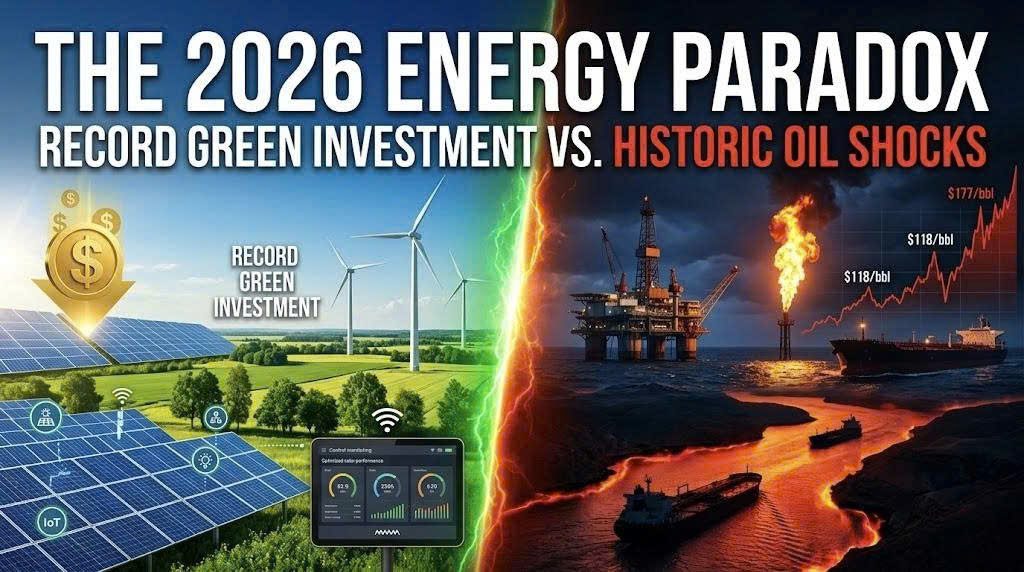
Tháng 4 năm 2026 chứng kiến một thị trường năng lượng toàn cầu phân hóa sâu sắc: sự bùng nổ đầu tư khổng lồ vào năng lượng tái tạo va chạm với cú sốc nguồn cung dầu mỏ do địa chính trị tồi tệ nhất trong nhiều thập kỷ. Thực tế kép này làm nổi bật những lỗ hổng của một nền kinh tế đang mắc kẹt ở giai đoạn giữa của quá trình chuyển đổi.
Phần 1: Sự bùng nổ Năng lượng Tái tạo và Những giới hạn Vận hành
Theo Cơ quan Năng lượng Tái tạo Quốc tế (IRENA), quá trình chuyển đổi toàn cầu sang năng lượng tái tạo là không thể đảo ngược, nhưng những rào cản mang tính cấu trúc vẫn còn tồn tại.
Dòng vốn đổ vào kỷ lục
-
Đầu tư toàn cầu vào quá trình chuyển đổi năng lượng đạt mức kỷ lục 2,4 nghìn tỷ USD (trong đó 800 tỷ USD dành cho sản xuất điện sạch).
-
Mặc dù vậy, IRENA cảnh báo rằng cần tới 5 nghìn tỷ USD mỗi năm để đạt được các mục tiêu Net Zero.
Khoảng trống Hiệu suất: Công suất lắp đặt không đồng nghĩa với sản lượng đầu ra đáng tin cậy. Nút thắt cốt lõi là tính gián đoạn và sự suy giảm hiệu suất vận hành. Một nghiên cứu năm 2026 của Đại học Oxford sử dụng dữ liệu thực địa từ Kazakhstan tiết lộ những tổn thất sản lượng thực tế đáng kể đối với cơ sở hạ tầng điện mặt trời:
-
Giảm 10–15% do biến động nhiệt độ hàng ngày.
-
Sai lệch 8–12% do sự thay đổi bức xạ mặt trời.
-
Thất thoát 3–5% công suất cho mỗi 10 μm bụi tích tụ.
Điểm mấu chốt: Bởi vì năng lượng tái tạo vẫn đang phải vật lộn với những giới hạn về lưu trữ và sự kém hiệu quả do thời tiết, các lưới điện toàn cầu chưa thể dựa vào chúng để cung cấp nguồn điện chạy nền (baseload power) ổn định. Điều này khiến thế giới vẫn phụ thuộc nặng nề vào nhiên liệu hóa thạch trong ngắn hạn.
Phần 2: Cú sốc Địa chính trị và Sự biến động của Thị trường
Chính vì sự phụ thuộc kéo dài này, cuộc phong tỏa quân sự tại Eo biển Hormuz — cắt đứt 20% nguồn cung dầu thô toàn cầu — đã châm ngòi cho cú sốc giá dầu nghiêm trọng nhất kể từ Chiến tranh Vùng Vịnh năm 1990.
Bức tranh Thị trường (Cuối tháng 3 năm 2026)
-
Giá dầu tăng vọt: Dầu thô Brent tăng hơn 60% trong tháng 3, đạt đỉnh ở mức 118,35 USD/thùng. Dầu WTI tăng 51% lên 102,92 USD/thùng.
-
Khí đốt tự nhiên đi ngang: Giá khí đốt giảm nhẹ (-0,62%), “miễn nhiễm” với cuộc khủng hoảng Hormuz nhờ lượng hàng tồn kho khu vực dồi dào.
-
Sự dị thường trong Tồn kho của Mỹ: Tồn kho dầu thô của Mỹ bất ngờ tăng mạnh thêm 10,26 triệu thùng. Sự tích tụ cục bộ này có khả năng là do hoạt động bảo trì của các nhà máy lọc dầu trong nước và các nút thắt xuất khẩu khiến dầu thô bị mắc kẹt trong đất liền, bất chấp tình trạng thiếu hụt trên toàn cầu.
Các Kịch bản Giá (Dự báo của Deutsche Bank)
-
Kịch bản cơ sở (Mở cửa lại vào tháng 4): Dầu Brent hạ nhiệt và ổn định trong khoảng 75–90 USD/thùng.
-
Phong tỏa kéo dài (Đến tháng 11): Dầu Brent đạt mức trung bình 177 USD/thùng, đẩy thị trường năng lượng vào vùng lạm phát thảm khốc.
Kết luận: Mệnh lệnh Chiến lược
Các sự kiện của năm 2026 chứng minh rằng việc đổ hàng nghìn tỷ đô la vào năng lượng xanh không mang lại sự miễn nhiễm ngay lập tức trước các cú sốc dầu mỏ địa chính trị. Để sống sót qua giai đoạn chuyển đổi này, các doanh nghiệp và nhà hoạch định chính sách phải áp dụng một chiến lược kép:
-
Tối đa hóa Hiệu quả Năng lượng Xanh: Triển khai giám sát thông minh (IoT) để giảm thiểu tổn thất vận hành trong các tài sản năng lượng tái tạo.
-
Phòng ngừa Rủi ro Nhiên liệu Hóa thạch: Duy trì các biện pháp phòng ngừa rủi ro tài chính nghiêm ngặt để bảo vệ biên lợi nhuận trước sự biến động khó lường của giá dầu.
Những ai thất bại trong việc quản lý cả hai vế của phương trình này sẽ có nguy cơ bị nghiền nát trong khoảng trống giữa một tương lai xanh và một hiện tại vẫn đang chạy bằng nhiên liệu hóa thạch.
Giải pháp: Bảo vệ Tương lai cho Tài sản của bạn với MMM
Việc điều hướng qua nghịch lý năng lượng này đòi hỏi nhiều hơn là chỉ đầu tư vốn; nó đòi hỏi sự kiểm soát vận hành chính xác. Đây chính là lúc MMM phát huy vai trò của mình.
Được thiết kế để thu hẹp khoảng trống hiệu suất trong năng lượng tái tạo, MMM là một nền tảng sản phẩm giám sát thông minh và IoT tiên tiến giúp loại bỏ những tổn thất tiềm ẩn do các yếu tố môi trường gây ra. Bằng cách cung cấp dữ liệu theo thời gian thực và có tính ứng dụng cao về các biến động, MMM trao quyền cho các nhà điều hành năng lượng:
-
Dự đoán và giảm thiểu thất thoát công suất trước khi chúng tác động đến lưới điện.
-
Tối ưu hóa lịch trình bảo trì nhằm cắt giảm triệt để chi phí O&M (Vận hành & Bảo trì).
-
Tối đa hóa sản lượng năng lượng, đảm bảo mỗi đồng đô la đầu tư vào công nghệ xanh đều mang lại lợi nhuận cao nhất.
Đừng để những điểm mù trong vận hành làm trầm trọng thêm rủi ro của một thị trường năng lượng đầy biến động. Khám phá cách MMM có thể bảo vệ biên lợi nhuận và tối ưu hóa danh mục năng lượng tái tạo của bạn ngay hôm nay.
[Tìm hiểu thêm và đặt lịch dùng thử (demo) hệ thống MMM tại đây: https://lctech.vn/the-mmm-smart-electricity-gas-water-meter/]