


Cách chúng ta làm việc đã thay đổi căn bản, nhưng các tòa nhà nơi chúng ta làm việc vẫn đang mắc kẹt trong quá khứ. Khi chiến dịch Net Zero toàn cầu tăng tốc, một trong những nguồn rò rỉ năng lượng ngầm lớn nhất không phải là công nghiệp nặng – mà chính là những không gian văn phòng vắng vẻ đang âm thầm lãng phí điện năng ngay trong lòng các thành phố. Đã đến lúc cơ sở hạ tầng vật lý của chúng ta phải bắt kịp với sự linh hoạt của kỹ thuật số.
1. “Văn phòng ma” (Ghost Office): Khi mô hình làm việc thay đổi nhưng hạ tầng thì không
Trong nhiều thập kỷ, hoạt động vận hành tòa nhà có tính dự báo khá cao. Nhân viên thường đến văn phòng vào buổi sáng, làm việc tại những bàn cố định và rời đi vào cuối ngày. Do đó, hệ thống điều hòa không khí (HVAC), chiếu sáng và thông gió được thiết kế theo các lịch trình cố định, đảm bảo toàn bộ không gian làm việc luôn sẵn sàng phục vụ các hoạt động diễn ra hằng ngày.
Tuy nhiên, sự lên ngôi của mô hình làm việc lai (hybrid work) đã phá vỡ sự ổn định này. Mật độ sử dụng văn phòng hiện nay biến động liên tục – theo ngày, theo tuần và thậm chí theo giờ. Một số khu vực có thể đông đúc vào buổi sáng nhưng gần như trống không vào buổi chiều. Không gian làm việc không còn tuân theo những nhịp điệu nhất quán như trước đây.
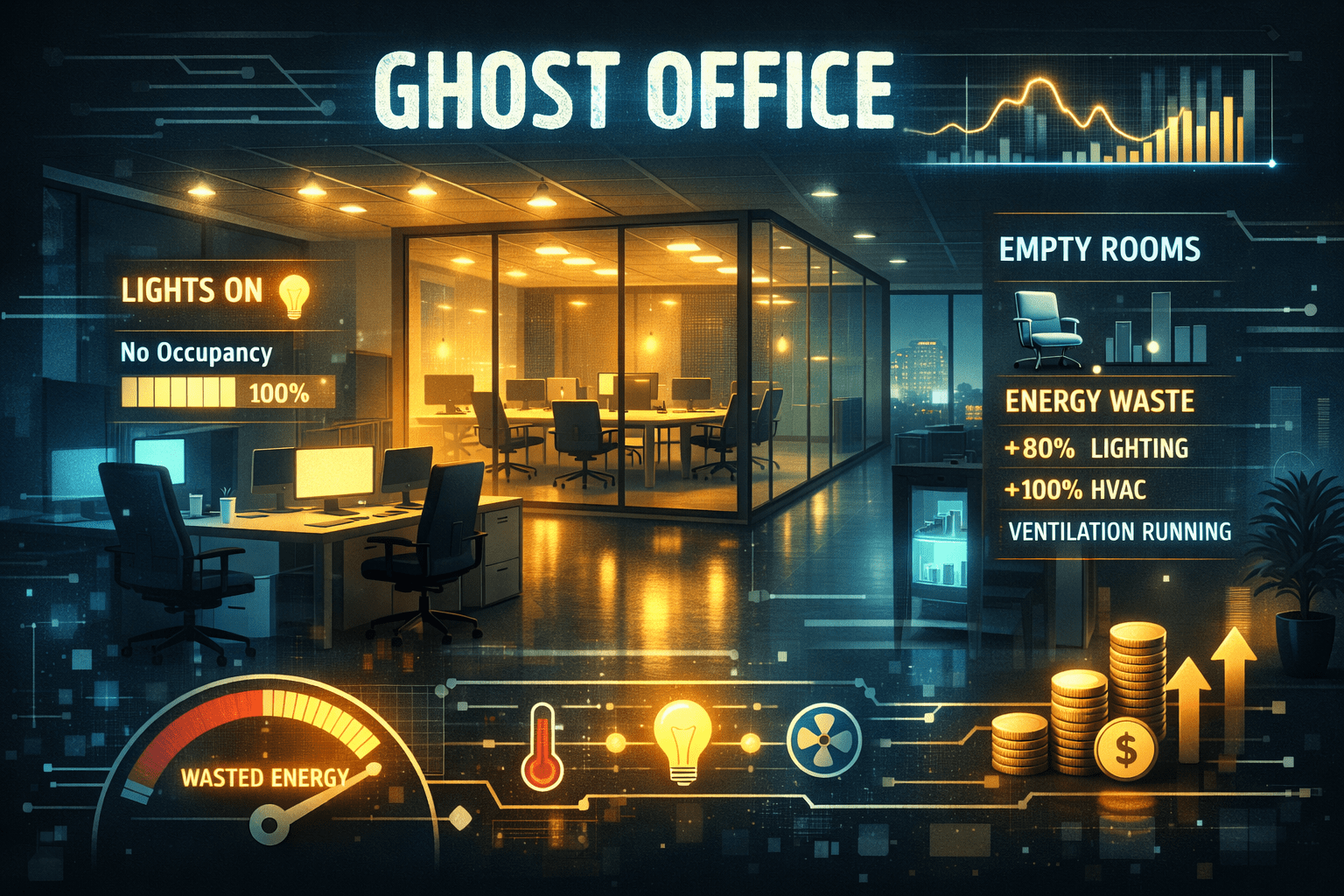
Mặc dù vậy, nhiều tòa nhà vẫn vận hành dựa trên những giả định lỗi thời. Hệ thống làm mát tiếp tục điều hòa toàn bộ các tầng ngay cả khi chỉ có vài khu vực nhỏ có người. Đèn vẫn sáng trong các phòng họp trống, và hệ thống thông gió chạy liên tục bất kể mức độ sử dụng thực tế ra sao.
Hệ quả là sự xuất hiện của những “Văn phòng ma” – những không gian mà mức tiêu thụ năng lượng phản ánh thói quen vận hành từ quá khứ thay vì nhu cầu thực tế. Ở quy mô lớn, sự kém hiệu quả này dẫn đến chi phí vận hành khổng lồ mà không mang lại giá trị tương xứng. Sự chênh lệch này báo hiệu nhu cầu cấp thiết về một mô hình vận hành thích ứng tốt hơn, phản ánh chính xác cách con người thực sự sử dụng không gian ngày nay.
2. AI dựa trên mật độ sử dụng (Occupancy-Based AI): Biến dữ liệu hiện diện thành nền tảng vận hành mới
Việc giải quyết bài toán “Văn phòng ma” bắt đầu từ việc trao cho các tòa nhà khả năng “nhìn thấy” không gian đang được sử dụng như thế nào theo thời gian thực.
AI dựa trên mật độ sử dụng kết hợp các cảm biến IoT với các mô hình phân tích dữ liệu để xác định chính xác khu vực nào đang được sử dụng, mật độ thay đổi ra sao trong ngày và các thói quen sử dụng tiến hóa như thế nào theo thời gian. Khi dữ liệu về mật độ người dùng trở thành đầu vào cho hệ thống quản lý tòa nhà, việc phân bổ năng lượng không còn tuân theo các quy tắc cứng nhắc mà sẽ tự động thích ứng với nhu cầu thực tế.
Sự chuyển dịch này giúp giảm thiểu đáng kể sự lãng phí, bởi tài nguyên chỉ được tiêu thụ khi cần thiết. Quan trọng hơn, hệ thống liên tục học hỏi từ dữ liệu lịch sử để nhận diện các quy luật sử dụng. Ví dụ, nếu một khu vực làm việc liên tục vắng người vào buổi chiều, mức tiêu thụ năng lượng tại khu vực đó có thể tự động giảm xuống trong khung giờ này mà không cần can thiệp thủ công.
Do đó, AI dựa trên mật độ không chỉ cắt giảm chi phí vận hành mà còn tạo ra một mô hình thích ứng, có khả năng tiến hóa cùng với sự thay đổi trong hành vi tại nơi làm việc.
Một khi các tòa nhà có thể phản hồi với dữ liệu thời gian thực, bước tiếp theo là tối ưu hóa hiệu suất trên toàn bộ hệ thống, thay vì chỉ cải thiện các thành phần đơn lẻ một cách rời rạc.
3. Tòa nhà Tự chủ (Agentic Building): Khi AI tiến hóa từ phản ứng sang điều phối
Tòa nhà Tự chủ (Agentic Building) đại diện cho giai đoạn tiếp theo của cơ sở hạ tầng thông minh, nơi AI làm được nhiều việc hơn là chỉ phản hồi lại dữ liệu – nó chủ động điều phối toàn bộ hệ thống.
Thay vì để các hệ thống HVAC, chiếu sáng và cảm biến hiện diện hoạt động độc lập, các tác nhân AI (AI agents) sẽ phân tích đồng thời nhiều luồng dữ liệu để xác định cách thức vận hành toàn bộ tòa nhà sao cho hiệu quả nhất. Việc tối ưu hóa không còn diễn ra ở cấp độ thiết bị, mà ở cấp độ hệ thống.
Chẳng hạn, AI có thể tính toán rằng việc điều chỉnh mức độ ánh sáng tự nhiên sẽ giúp giảm nhu cầu làm mát, hoặc việc thay đổi lịch trình HVAC dựa trên dự báo mật độ người dùng có thể cải thiện hiệu suất tổng thể. Những quyết định này không phải là các quy tắc cố định mà được liên tục tinh chỉnh thông qua việc học hỏi từ dữ liệu thực tế.
Khi bài toán tối ưu hóa được mở rộng từ các hệ thống phụ rời rạc sang sự phối hợp cơ sở hạ tầng toàn diện, các tòa nhà bắt đầu hoạt động như những môi trường thông minh, có khả năng liên tục thích ứng để đạt hiệu suất tối ưu nhất.
4. Khi hiệu quả vận hành trở thành lợi thế cạnh tranh
Khi chi phí năng lượng biến động và áp lực khử carbon gia tăng, hiệu quả vận hành đang trở thành yếu tố tạo nên sự khác biệt then chốt.
Những tòa nhà có khả năng thích ứng với các mô hình sử dụng thực tế giúp doanh nghiệp kiểm soát chi phí tốt hơn, đồng thời mang lại môi trường ổn định và thoải mái hơn cho nhân viên. Trải nghiệm tại nơi làm việc và hiệu suất vận hành đang ngày càng gắn kết chặt chẽ với nhau.
Thêm vào đó, hoạt động vận hành tòa nhà tích hợp AI giúp cải thiện tính minh bạch trong quản lý năng lượng, hỗ trợ các tổ chức đáp ứng yêu cầu ESG và nâng cao giá trị tài sản. Khi các nhà đầu tư và khách thuê ngày càng coi trọng hiệu suất năng lượng, những tòa nhà có khả năng liên tục tự tối ưu hóa sẽ giành được lợi thế cạnh tranh rõ rệt trên thị trường.
Do đó, các tòa nhà thông minh không còn đơn thuần là một bản nâng cấp công nghệ – chúng đang trở thành một thành tố chiến lược cho sự phát triển bền vững dài hạn.
Kết luận: Từ hạ tầng phản ứng đến hệ thống thích ứng
Sự tiến hóa của trí thông minh trong các tòa nhà tuân theo một lộ trình rõ ràng:
-
“Văn phòng ma” làm nổi bật khoảng cách giữa cách các tòa nhà vận hành và cách con người thực sự sử dụng không gian.
-
AI dựa trên mật độ sử dụng thu hẹp khoảng cách này bằng cách tích hợp dữ liệu hiện diện thời gian thực vào các quyết định vận hành.
-
Tòa nhà Tự chủ (Agentic Building) tiến thêm một bước nữa khi cho phép các hệ thống liên tục học hỏi, dự đoán và tự tối ưu hóa.
Kết hợp lại, những giai đoạn này đại diện cho một sự chuyển dịch: từ vận hành dựa trên lịch trình cố định, sang trí thông minh dẫn dắt bởi dữ liệu, và cuối cùng là một cơ sở hạ tầng hoàn toàn thích ứng.
Khi các tòa nhà có thể phản hồi linh hoạt với nhu cầu thực tế, chúng không chỉ đơn thuần là tiêu thụ năng lượng — chúng đang chủ động quản lý tài nguyên. Năng lực này cho phép các tổ chức cắt giảm chi phí, củng cố các mục tiêu bền vững và duy trì năng lực cạnh tranh trong dài hạn.
Vì vậy, AI không chỉ đang thay đổi cách các tòa nhà vận hành mà còn định hình lại cách các tổ chức khai thác giá trị từ chính cơ sở hạ tầng vật lý của họ.