


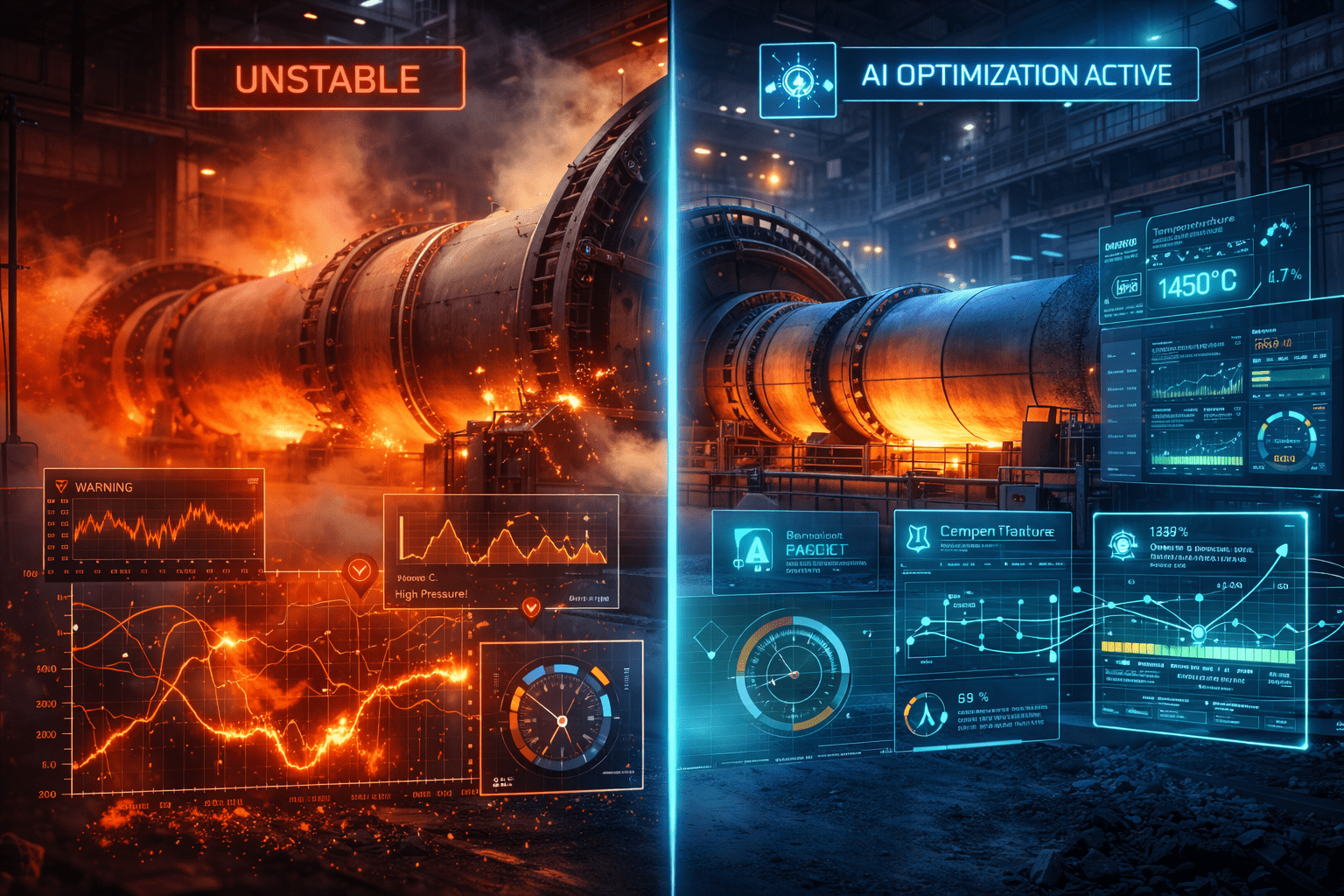
Ngành công nghiệp nặng – đặc biệt là sản xuất xi măng, thép, hóa chất và giấy – đang âm thầm đối mặt với một thách thức nan giải: làm thế nào để đồng thời tăng năng suất, giảm chi phí năng lượng và đáp ứng các mục tiêu phát thải ròng bằng không (Net-Zero)?
Trọng tâm của thách thức này nằm ở lò quay (rotary kiln) – một cỗ máy khổng lồ dài hàng chục mét, tiêu thụ hàng tấn nhiên liệu mỗi giờ. Trong nhiều thập kỷ, việc vận hành lò phụ thuộc nhiều vào kinh nghiệm thủ công của các kỹ sư, dẫn đến tình trạng thiếu ổn định và lãng phí năng lượng. Chính khoảng trống này đã mở đường cho Trí tuệ nhân tạo (AI) và Hệ thống điều khiển quá trình tiên tiến (Advanced Process Control – APC) trở thành một nhân tố thực sự làm thay đổi cục diện ngành công nghiệp.
1. Tối ưu hóa thời gian thực: Chìa khóa cho sản xuất bền vững
Sức mạnh cốt lõi của APC không nằm ở việc thay thế con người, mà là ở khả năng giám sát và điều chỉnh hàng nghìn tín hiệu mỗi giây. AI liên tục phân tích các thông số như áp suất, nhiệt độ, lưu lượng khí và tốc độ quay để tự động đưa ra vô số quyết định, nhằm giữ hệ thống luôn ở trạng thái “vàng” – điều kiện tối ưu nhất.
Kết quả mang lại là những thành quả có thể đo lường và đã được thực tế chứng minh:
-
Tại một lò quay niken ở Châu Á (ANDRITZ): Việc triển khai APC đã giúp giảm 4-7% lượng tiêu thụ nhiên liệu hóa thạch, đồng thời tăng 2–4% công suất sản xuất. Đáng chú ý, mức độ biến thiên nhiệt độ bên trong lò giảm tới 40–50%, mang lại chất lượng sản phẩm đồng đều hơn.
-
Tại Nhà máy Xi măng Bursa Cimento (Thổ Nhĩ Kỳ – ABB): Nhờ hệ thống Điều khiển Dự báo theo Mô hình (Model Predictive Control – MPC), nhà máy đã cải thiện được 2-3% cả về tốc độ nạp liệu (feed rate) trung bình và lượng nhiệt năng tiêu thụ. Nồng độ oxy trong lò hiện được kiểm soát ở ngưỡng thấp hơn, đồng nghĩa với việc quá trình đốt cháy diễn ra hiệu quả hơn.
Nhìn rộng hơn, các trường hợp này đều chia sẻ một điểm chung: tối ưu hóa thời gian thực không chỉ tiết kiệm năng lượng mà còn “làm mượt” toàn bộ quá trình sản xuất.
2. “Lợi ích kép”: Khi hiệu quả kinh tế và bảo vệ môi trường hội tụ
Trong bối cảnh giá năng lượng biến động rủi ro và áp lực ngày càng tăng từ các quy định về khí thải (chẳng hạn như Thuế Biên giới Carbon), APC không chỉ là câu chuyện “sống xanh” – đó còn là vấn đề sống còn về mặt chi phí.
Một số nghiên cứu điển hình:
-
Sappi (Ngành Giấy – Châu Âu): Tập đoàn này đã triển khai AI để quản lý năng lượng tại nhà máy Maastricht. Trước đây, việc vận hành dựa trên các dữ liệu thủ công, rời rạc. Giờ đây, nền tảng AI tự động hóa việc thu thập dữ liệu, giúp nhà máy (nơi vừa tiêu thụ vừa cung cấp điện cho lưới điện quốc gia) tối ưu hóa luồng năng lượng theo thời gian thực.
-
CRH Ozarow (Ngành Xi măng – Ba Lan): Sở hữu một lò quay dài 99 mét – một trong những lò lớn nhất Châu Âu – CRH đã sử dụng giải pháp Expert Optimizer của ABB. Mục tiêu không chỉ là tiết kiệm điện năng mà còn tăng cường sử dụng nhiên liệu thay thế (RDF) – một bài toán phức tạp mà trí não con người khó có thể tính toán cân bằng liên tục. AI đã giải quyết vấn đề đó: đốt rác thải lấy năng lượng trong khi vẫn giữ cho lò vận hành ổn định.
-
Borouge (Ngành Hóa dầu – UAE): Hợp tác cùng Honeywell, Borouge đã thử nghiệm mô hình vận hành tự động hóa hoàn toàn bằng AI. Kết quả cho thấy tiềm năng tăng 20% hiệu suất, giảm 20% thời gian ngừng máy (downtime) và giảm 15% chi phí vận hành.
Dù hoạt động trong các lĩnh vực khác nhau, điểm cốt lõi vẫn rất rõ ràng: AI giúp các doanh nghiệp đồng thời cắt giảm chi phí và giảm lượng khí thải – một “lợi ích kép” hiếm có.
3. Từ “Kinh nghiệm” đến “Dữ liệu”: Sự dịch chuyển nền tảng
Yếu tố cốt lõi đằng sau tất cả những cải tiến trên là sự chuyển dịch từ phương thức vận hành dựa trên kinh nghiệm sang ra quyết định dựa trên dữ liệu (data-driven).
Nếu trước đây các kỹ sư phải “nhìn ngọn lửa để điều khiển lò”, thì nay AI sử dụng dữ liệu lịch sử và các mô hình học máy (machine learning) để dự báo tình trạng hệ thống trước từ 30-60 phút. Điều này cho phép:
-
Điều chỉnh chủ động thay vì phản ứng chậm trễ.
-
Duy trì hệ thống vận hành ổn định liên tục.
-
Giảm thiểu rủi ro xảy ra sự cố.
Tóm tắt kết quả từ các đợt triển khai thực tế trong công nghiệp:
| Chỉ số | Mức độ Cải thiện |
| Tiết kiệm năng lượng | Giảm 2-7% lượng nhiên liệu |
| Tăng năng suất | 2-4% (không cần đầu tư thêm thiết bị) |
| Giảm biến thiên nhiệt độ | 40-50% |
| Giảm tải vận hành và rủi ro | Đáng kể |
Kết luận
APC không còn là công nghệ mang tính thử nghiệm – nó đang nhanh chóng trở thành tiêu chuẩn mới trong vận hành công nghiệp nặng. Bằng cách kết hợp AI với dữ liệu thời gian thực, các doanh nghiệp có thể đồng thời đạt được ba mục tiêu tưởng chừng mâu thuẫn: tăng năng suất, giảm chi phí và hạ mức phát thải. Trong bối cảnh chuyển đổi số đang tăng tốc và áp lực hiện thực hóa mục tiêu Net Zero ngày càng lớn, APC thực sự là nhân tố thay đổi cuộc chơi, giúp ngành công nghiệp nặng định nghĩa lại cách thức vận hành của mình.
Nhìn về bối cảnh công nghiệp tại Việt Nam, sự chuyển dịch từ vận hành thủ công sang quyết định dựa trên dữ liệu (data-driven) đang được cụ thể hóa thông qua giải pháp Máy đọc chỉ số thông minh MMM của Công ty TNHH Công nghệ LC Việt Nam (LC Tech). Nếu các hệ thống APC tập trung kiểm soát các cỗ máy đặc thù như lò quay, thì hệ thống MMM lại đóng vai trò như một “mạng lưới thần kinh” quản lý toàn bộ huyết mạch năng lượng của nhà máy.
Bằng cách tích hợp phần cứng linh hoạt cùng phần mềm thông minh, MMM cho phép thu thập, giám sát và phân tích liên tục các chỉ số điện, nước, gas và khí theo thời gian thực. Đặc biệt, việc ứng dụng thuật toán học máy (Machine Learning) giúp hệ thống không chỉ phát hiện rò rỉ, cảnh báo bất thường ngay lập tức mà còn dự báo chính xác nhu cầu sử dụng để phân bổ năng lượng hợp lý. Thực tế triển khai đã chứng minh giải pháp của LC Tech có thể giúp các doanh nghiệp cắt giảm từ 5% đến 20% chi phí vận hành.
Trong cuộc đua chuyển đổi số và sức ép giảm phát thải, MMM chính là công cụ thực chiến bước đầu, giúp các nhà máy tại Việt Nam làm chủ dữ liệu, ngăn chặn thất thoát và tạo dựng nền tảng vững chắc để hướng tới các cam kết Net-Zero toàn cầu.